
Table of Contents
Managed Cloud Services for Law Firms isn’t just a fancy term – it’s the key to staying ahead.
Think of it as having a tech-savvy partner that takes care of your firm’s digital needs, so you can focus on what you do best: practicing law.
From keeping client data safe to making sure you can work from anywhere, managed cloud services are changing the game for law firms.
Let’s dive in and see what all the fuss is about!
Managed Cloud Services for Law Firms describes a specialized suite of technology solutions and support, designed to optimize law firm operations through enhanced security, scalable resources, and efficient, remote-accessible systems.
The Impact of Managed Cloud Services for Law Firms
Picture this: A bustling law firm, where attorneys navigate through piles of case files and struggle with outdated systems, suddenly shifts to a world where documents are a click away, and collaboration happens in real-time, no matter where they are.
This isn’t a glimpse into the future; it’s the reality that managed cloud services bring to law firms today.
By turning to these specialized tech solutions, law firms are not just upgrading their IT infrastructure; they’re redefining how legal work is done. In this seamless digital environment, efficiency isn’t just improved; it’s transformed.
This transformation goes beyond mere convenience – it’s about empowering legal professionals with tools that match the pace and complexity of modern law.
So let’s explore how managed cloud services are not just changing, but revolutionizing the landscape of legal practice.

IT Support for Law Firms:
Understanding your options for support is essential to knowing what to expect when something hits the fan — or better yet, before something does.
Decoding Managed Cloud Services
What are managed cloud services for law firms?
It’s much more than just a tech upgrade – they’re a strategic ally in the digital age.
These services are a blend of cloud computing resources like servers and storage, combined with the expertise of a dedicated team managing them. Unlike traditional IT setups, where law firms had to juggle software updates, hardware issues, and cybersecurity threats on their own, managed cloud services streamline this entire process.
They’re like having an expert tech team on call, ensuring that the firm’s digital infrastructure is always up-to-date, secure, and tailored to the unique needs of legal practice.
With these services, law firms can focus on their cases and clients, confident that their tech backbone is strong, reliable, and cutting-edge.
Data Storage and Management
They offer robust data storage solutions, tailored to handle the large volumes of sensitive information typical in legal practices.
This includes regular backups, disaster recovery plans, and data encryption.
Bonus: use document management software, like LexWorkplace, to ensure you’re managing your data optimally.
Customized Software Services
From case management to document handling, cloud services offer a range of legal-specific software that is continually updated and integrated seamlessly into the firm’s workflow.
Advanced Server Solutions
Managed cloud services provide sophisticated server technologies that are maintained, updated, and secured by the service provider.
This ensures high performance and reliability for all the firm’s data needs.
Without cloud services, you’re looking at outdated methodologies of utilizing software, such as owning and operating your own servers in-house. This leads to much more burden than going with managed cloud services for law firms, along with unnecessary costs and maintenance.
For example, take a look at the chart below to understand what server ownership means for your firm over the course of the next 7 years.

As you can see, not only do servers require a substantial upfront investment, but the frequency of server failure starts at 5% and increases with each year. At the 4-year mark, the chance of failure doubles and nears 20% by the 7th year.
Cybersecurity and Compliance
Proactive monitoring and advanced security protocols protect against cyber threats.
Compliance with legal industry standards (like GDPR and HIPAA) is meticulously managed, ensuring the firm’s operations meet all regulatory requirements.
Scalable Resources
As the firm grows, so do its technological needs.
Managed cloud services can scale up or down, providing the right amount of resources as required, without the need for significant capital investment.
On-Demand IT Support
Immediate access to IT expertise means technical issues are resolved quickly, minimizing downtime and maintaining continuous operations.
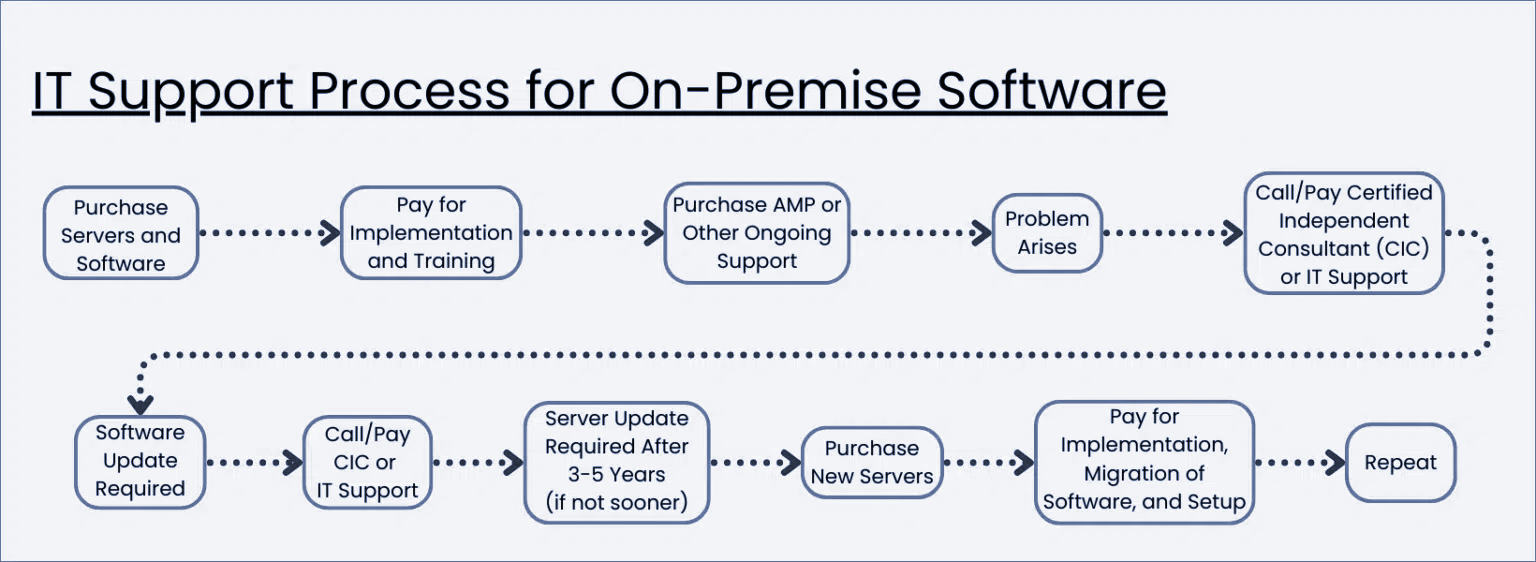
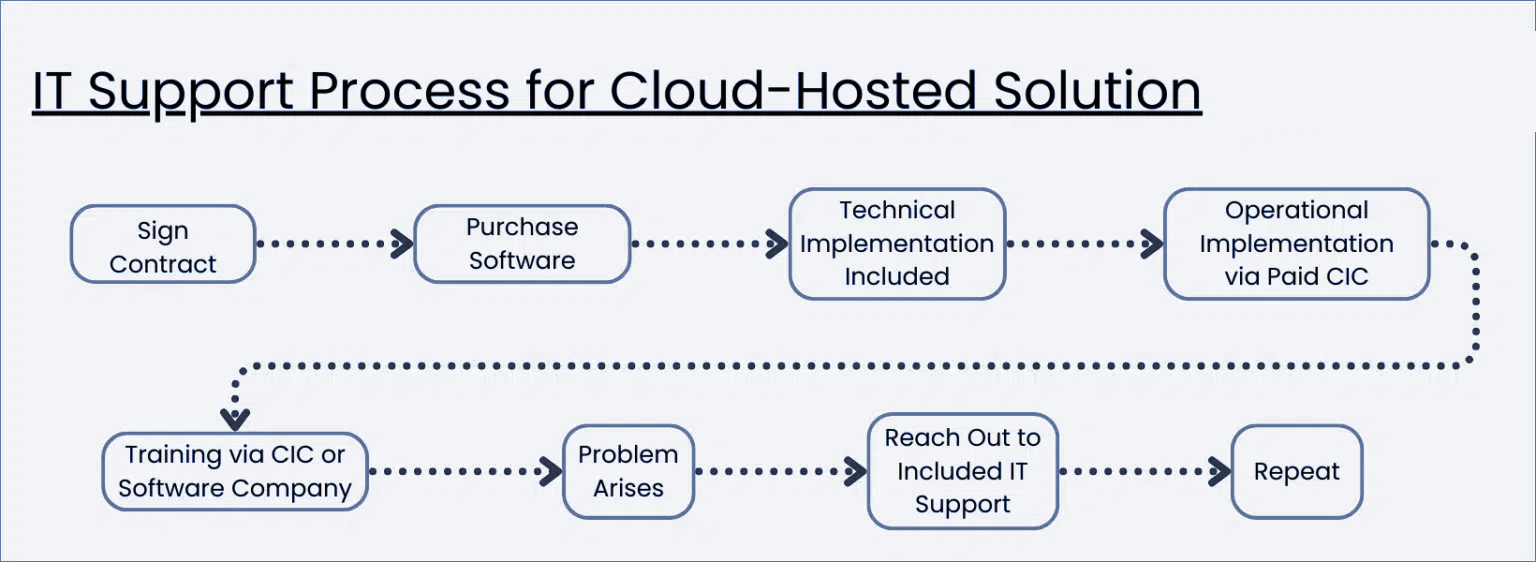
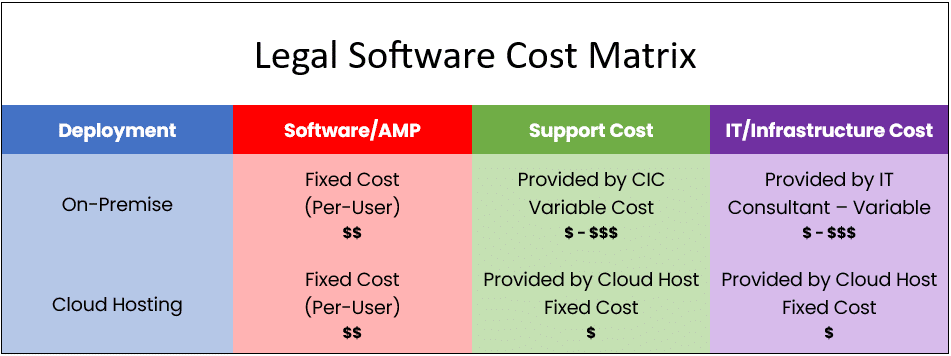
When you maintain your software on-premise, through your own servers, your IT setup and support process is more complex and often more expensive.
Take a look at the flow chart below to understand the process you would have to go through each time you need a new software, new servers, or updates.
However, if you decide to pursue a cloud-hosted solution, your setup process is simpler, and your IT support is both easily and readily available.
Remote Access and Mobility
Lawyers can securely access the firm’s system from anywhere, facilitating remote work and ensuring continuity and flexibility.
Customization and Integration
Services are tailored to the specific needs of the firm, ensuring a perfect fit with existing processes and systems.
Integration with other tools and platforms is also managed, creating a cohesive and efficient tech environment.
By utilizing these features, law firms can focus on their core legal work, confident that their technological infrastructure is not only state-of-the-art but also perfectly aligned with their specific professional needs.

Visualizing Managed Cloud Services for Law Firms
In the past, law firms were anchored to physical servers for operating essential practice management and accounting software like ProLaw, PCLaw, Time Matters, Tabs3, or even Timeslips and QuickBooks.
This traditional approach required substantial investments in physical servers and ongoing IT management, posing both logistical and financial challenges.
Now, the technological paradigm has shifted towards the private cloud, a specialized, hosted IT environment designed specifically for the unique demands of legal practices.
This modern solution effectively replaces the conventional server, serving as a singular, secure hub for all of a law firm’s software, data, and communication needs.
How Private Clouds Transform Law Firm IT:
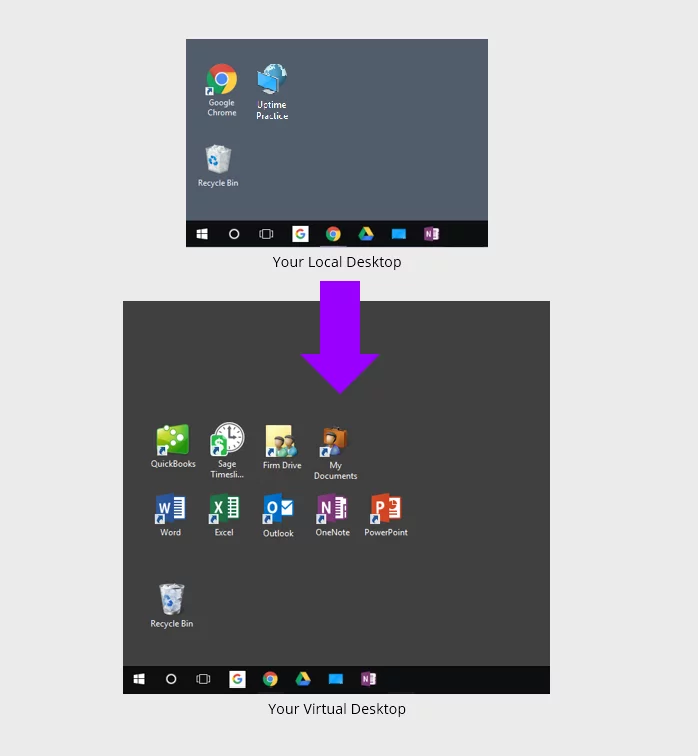
The introduction of private clouds in law firms offers several strategic benefits:
In essence, the transition to private clouds represents a significant leap forward in legal IT.
It not only simplifies technology management for law firms but also aligns their operations with the dynamic, increasingly digital nature of modern legal practice.
By adopting this innovative approach, law firms can ensure they remain competitive, agile, and responsive to both client and market demands.
Take a look at what cloud-hosting looks like through Uptime Cloud (formerly Uptime Practice).
Benefits of Managed Cloud Services in Legal Settings
The adoption of managed cloud services in law firms unlocks a myriad of benefits, fundamentally changing how legal professionals work.
Let’s dive into some of these key benefits.
Enhanced Data Accessibility
Lawyers can access files and documents from any location, ensuring critical information is always at their fingertips.
This facilitates quicker decision-making and client communication.
Improved Collaboration
Real-time document sharing and editing capabilities enable team members to work together seamlessly, regardless of geographical barriers.
This leads to more cohesive case management and streamlined workflows.
Operational Flexibility
Managed cloud services easily adapt to the changing needs of a law firm, scaling resources up or down based on demand.
This flexibility is key for managing varying caseloads efficiently.
Cost-Effectiveness
By reducing the need for physical infrastructure and in-house IT management, managed cloud services lower overhead costs.
This transition to a more predictable, subscription-based model helps in better budget management.
Robust Security
Advanced security protocols protect sensitive client data from cyber threats, ensuring compliance with legal data protection standards.
Disaster Recovery and Data Backup
Regular backups and robust disaster recovery plans ensure that critical legal data is protected and quickly recoverable in case of any data loss incidents.
Scalable Storage Solutions
As law firms grow, their data storage needs change. Managed cloud services offer scalable storage solutions that can accommodate expanding data requirements without significant capital investment.
Streamlined IT Management
Managed cloud services take the burden of IT management off the law firm’s shoulders, allowing lawyers to focus more on their legal practice rather than tech concerns.
By focusing on these benefits, law firms can leverage managed cloud services to not only improve their day-to-day operations but also to secure a competitive advantage in the legal market.
Security and Compliance: Core Pillars of Managed Cloud Services
In the world of legal services, where client confidentiality and data security are paramount, managed cloud services shine as a beacon of assurance.
These services offer robust security protocols, which are crucial for protecting sensitive client data from ever-evolving cyber threats.
Moreover, compliance is a non-negotiable aspect in the legal sector.
Managed cloud services are adept at navigating the complex web of industry regulations, ensuring that law firms stay compliant with standards like GDPR, HIPAA, or other relevant legal data protection laws.
This compliance is not just about following rules; it’s about building trust with clients and maintaining the firm’s reputation.
Choosing a Managed Cloud Service Provider for Your Law Firm
Selecting the right managed cloud service provider is a pivotal decision for any law firm.
Here are key factors to consider:
Security & Compliance
Investigate their security certifications and compliance with standards like ISO 27001.
Assess their history in handling data breaches or security incidents.
Likewise, verify their experience in dealing with legal compliance issues and their ability to ensure your firm remains compliant.
Cost Structure and Transparency
Understand their pricing models – whether it’s pay-per-use, subscription-based, or a fixed cost.
Ensure there are no hidden fees and that the pricing structure is clear and predictable.
It’s important that the cost aligns with your firm’s budget and provides value for the services offered.
Service and Support
Examine the level of support offered.
This includes the availability of customer service and the quality of technical assistance.
Scalability and Flexibility
Your provider should offer scalable solutions that grow with your firm.
Expertise in the Legal Industry
Choose a provider who understands the nuances of legal work.
Related: Learn more about law firm software you could host through a legal-focused cloud host.
View our Software Specific Resources:
















By delving into these factors, law firms can make a well-informed decision, selecting a managed cloud service provider that best fits their operational needs and strategic objectives.

Juris: Complete Review, Features, Pricing:
Discover how to “cloudify” Juris into a secure private cloud for 24/7 access, NIST-level security, and a server-free office.
Migrating to Managed Cloud Services: A Step-by-Step Guide for Law Firms
Migrating to managed cloud services is a significant step for any law firm.
Here’s a structured approach to ensure a smooth transition:
1. Assessment and Planning
Begin with a thorough assessment of your current IT infrastructure.
Identify what needs to be moved to the cloud and any specific requirements or challenges.
Develop a detailed migration plan that includes timelines and milestones.
2. Choosing the Right Service
Based on the assessment, select the appropriate cloud services that meet your firm’s needs.
This should align with the factors discussed in the previous section.
3. Data Preparation and Backup
Before migration, ensure all data is properly backed up.
Cleanse and organize the data to facilitate a smooth transition.
4. Implementation
Start the migration process as per the plan.
This might be done in phases to minimize disruption. Ensure that all data is securely transferred and integrated with the new cloud environment.
5. Testing and Validation
After migration, thoroughly test the new environment to ensure that all applications and data are functioning as expected.
Validate the security and compliance aspects.
6. Training and Support
Provide comprehensive training to your staff on the new system.
Ensure ongoing support is available to address any issues or questions that arise.
7. Post-Implementation Review
Finally, conduct a post-migration review to ensure all objectives have been met and identify areas for improvement.
By following these steps, law firms can ensure a successful migration to managed cloud services, positioning themselves for enhanced efficiency and growth.
Enhancing Managed Cloud Services with Robust IT Support
Integrating robust IT support with managed cloud services amplifies their effectiveness.
Here’s how law firms can maximize this integration:
By leveraging these support services, law firms can fully capitalize on the benefits of managed cloud services, ensuring a smooth, secure, and efficient digital working environment.
Frequently Asked Questions

Uptime Legal’s Technology Solutions
Cloud, software, IT, and document management built for today’s law firms.